Historic Milestone: First Captive-Bred Red Octopuses Revealed in San Diego
Key Takeaways
- Two juvenile red octopuses are now on display at the Birch Aquarium in San Diego.
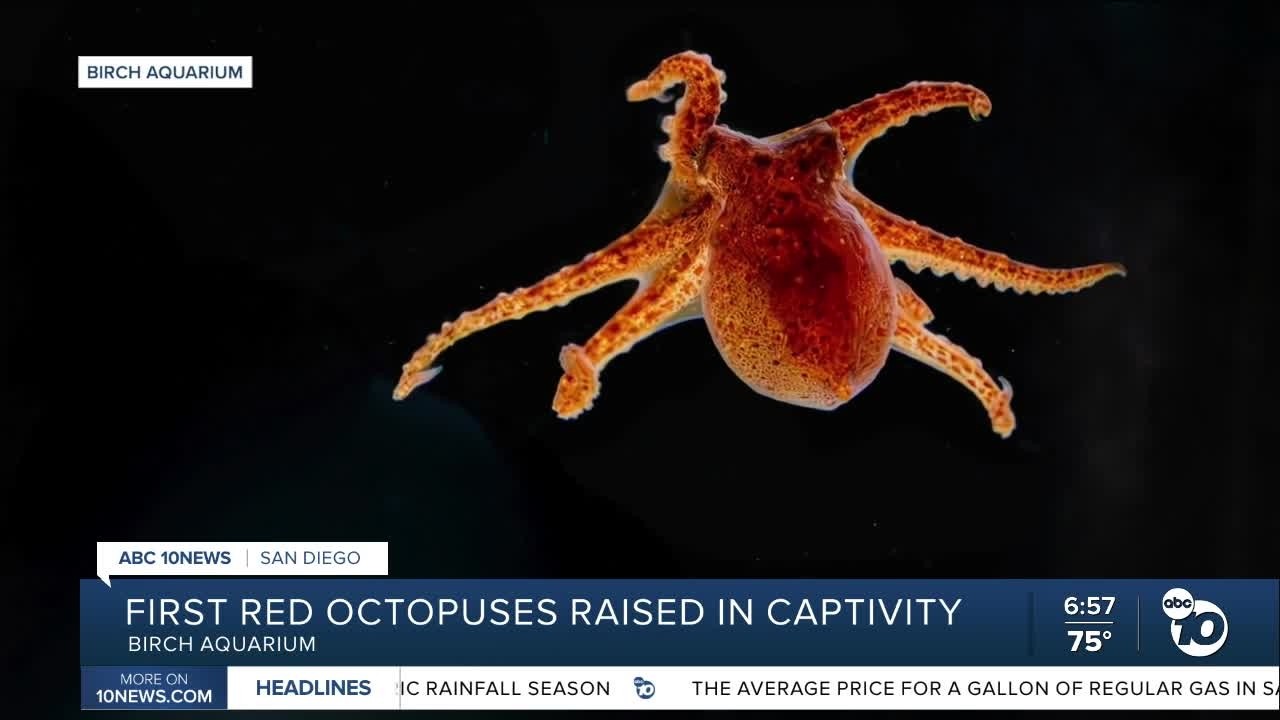
- These animals represent the first of their species successfully raised from hatching to the juvenile stage in captivity.
- In the wild, only about one percent of octopuses survive to adulthood, making this achievement highly significant.
- Aquarium staff waited months to ensure the creatures completed their settlement metamorphosis before public viewing.
Ten months ago, tiny eggs the size of a grain of rice hatched into free-swimming paralarvae. Today, visitors can witness the remarkable transformation of these cephalopods up close at one of Southern California's premier marine research centers.
A Breakthrough in Marine Science
The Birch Aquarium at Scripps Institution of Oceanography at UC San Diego recently announced that two juvenile red octopuses have officially entered public exhibition. These specimens belong to a group of six that successfully reached the juvenile stage, marking a major milestone in advanced cephalopod husbandry. Historically, raising octopuses from the larval phase in controlled environments has proven exceptionally difficult.
Maddy Tracewell, the senior aquarist of animal health, led the dedicated Animal Care Team through this unprecedented process. Because no facility had previously documented raising this specific species from hatching all the way to juvenility, researchers had to observe developmental markers in real time. Tracewell's meticulous tracking allowed her team to determine exactly when the animals were ready for display.
Physical Transformations and Camouflage Mastery
The journey from microscopic paralarvae to fully formed juveniles spanned approximately nine months. During this period, the octopuses underwent dramatic physiological changes. Their camouflage capabilities sharpened significantly, and their eyes developed distinct horizontal pupils characteristic of adult red octopuses.
Furthermore, their skin evolved as leucophores light reflecting cells expanded, giving their bodies a more opaque appearance. They also developed defined skin papillae along their heads and torsos. These textural enhancements grant them superior control over their physical appearance, allowing them to blend seamlessly into rocky reef environments.
Watching them grow over the last ten months has been such an incredible experience, and I have gained such a newfound appreciation and respect for red octopuses. Being able to finally share them with our guests and move two on display is such an exciting milestone. — Maddy Tracewell, Senior Aquarist of Animal Health
Local California Context
San Diego County serves as a global hub for marine biology and oceanographic research. The Birch Aquarium's success in breeding these red octopuses highlights the region's commitment to advancing scientific understanding of native coastal ecosystems. Visitors can currently view the pair in a specially designed nursery habitat within the Coastal California section of the Adam R. Scripps Living Seas Gallery. A divider keeps the animals safely separated while allowing them to grow side by side.
Background on Octopus Conservation
Red octopuses are native to the Eastern Pacific, ranging from Baja California down to Peru. In natural habitats, environmental pressures are fierce. Predation rates are high, and it is estimated that only around one percent of hatchlings survive to reach adulthood. Captive breeding programs like this one provide valuable data that could eventually aid in broader conservation efforts and improve care standards across international aquarium networks.
Expert Recognition and Future Research
Tracewell recently presented her findings on rearing red octopus paralarvae through settlement at the 2026 Regional Aquatics Workshop. Her presentation was honored with the Best First Time Presenter Award. She plans to continue sharing her methodologies with colleagues worldwide to refine best practices for cephalopod care.
Guests visiting the Birch Aquarium in San Diego are encouraged to stop by the Living Seas Gallery to observe these historic creatures. This exhibition offers a rare glimpse into the early life stages of a fascinating marine predator that is rarely seen outside of deep sea expeditions or specialized research facilities.